October Bird Report for Colorado
Somewhere over Colorado this October, the shift changed. The hummingbirds that buzzed your feeders all summer slipped away south, and a whole new crew blew in from the Arctic and down from the peaks. And a kingbird from south Texas parked itself in Greenwood Village and simply refused to leave. Here's how the month played out, straight from the eBird reports birders across the state filed in October 2026.
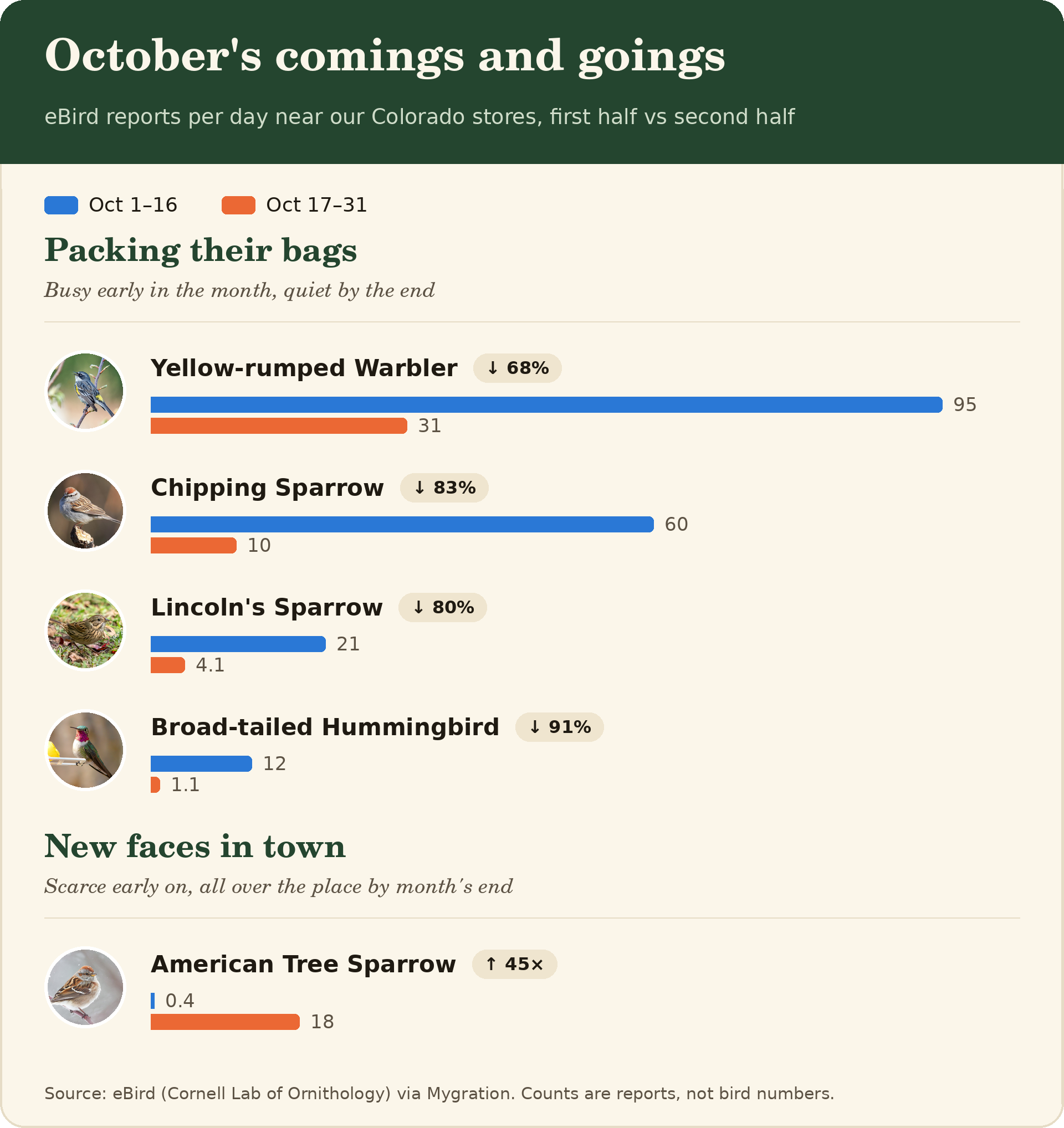
Blue is the first half of the month, orange the second. Orange shrinking? That bird is heading out. Orange growing? It's moving in.
Packing their bags
The hummingbirds have left the building. Broad-tailed Hummingbirds, the wing-trilling soundtrack of a Front Range summer, were reported more than 220 times across Colorado in October, and the last stragglers were spotted at the start of November. Their cousins beat them to the exit: the last Ruby-throated was reported on October 9, Rufous and Calliope on October 14, and Black-chinned on October 22. Go ahead and scrub your nectar feeder and tuck it away until spring. Want to leave it up for one more late traveler? Totally fair, just swap the nectar every couple of days.
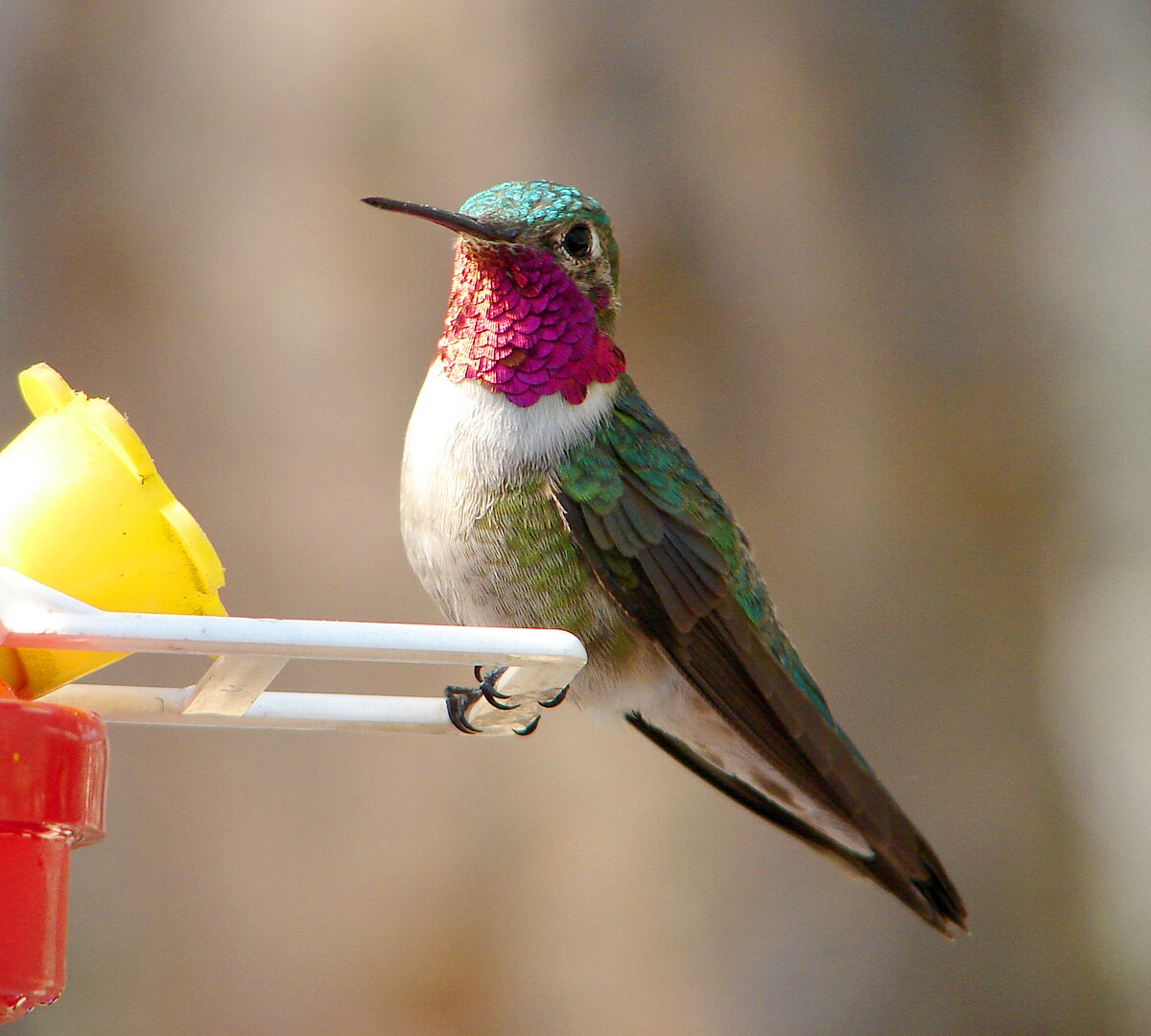
Broad-tailed Hummingbird. Photo: Wikimedia Commons
The warblers have blown through. Yellow-rumped Warblers ("butter-butts" to birders, thanks to that bright yellow patch on the rump) were the most-reported warbler in the state, with more than 2,000 October reports. Then they all but vanished: sightings fell by almost 90% in the first half of November. Across North America, the average Yellow-rumped Warbler report slid roughly 460 miles south between the first week of October and mid-November. That's a lot of miles on very small wings. Western Tanagers, those flame-headed summer showoffs, were last reported in Colorado on October 20.
Chipping Sparrows checked out. They were one of the busiest sparrows of the month, with more than 1,100 reports in October. By the first two weeks of November they were down to a handful.
New faces in town
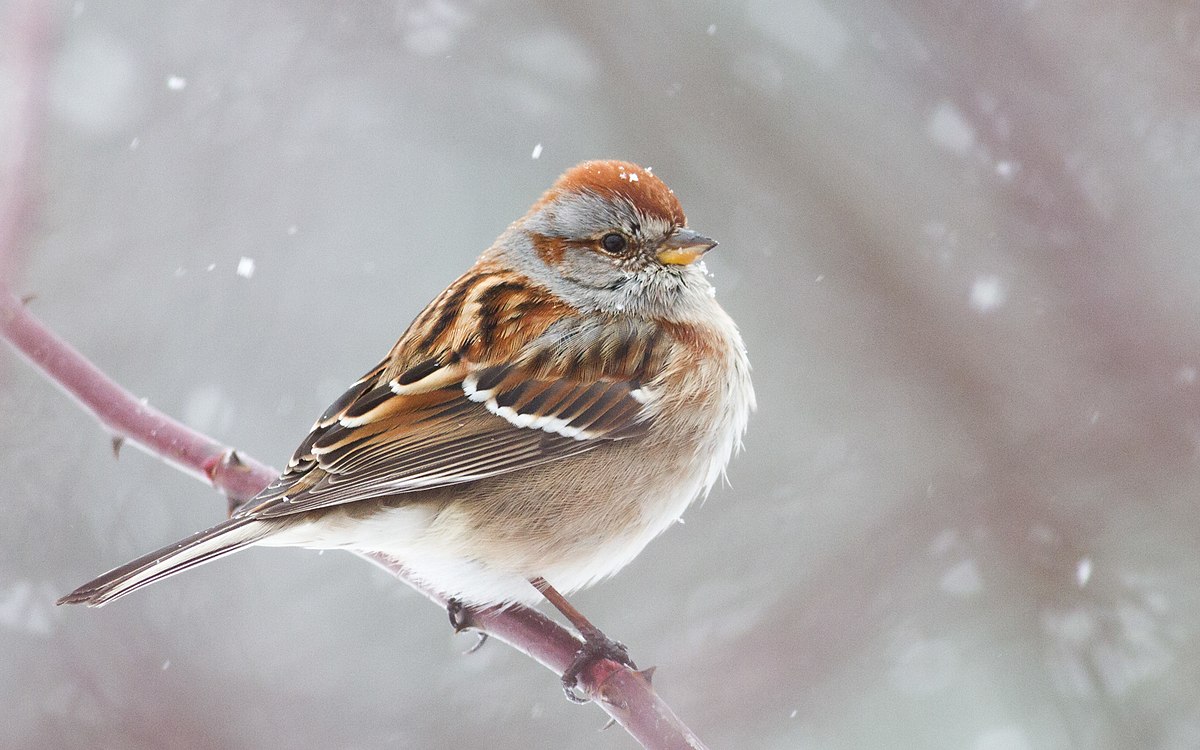
American Tree Sparrows are back. These rusty-capped little birds spend the summer on the edge of the Arctic tundra, so to them a Colorado winter is practically a beach vacation. Sightings jumped from about 8 a day in October to more than 30 a day in early November. Look for them shuffling around on the ground under your feeders. Scatter some millet and other small seeds down low and they'll make themselves at home.
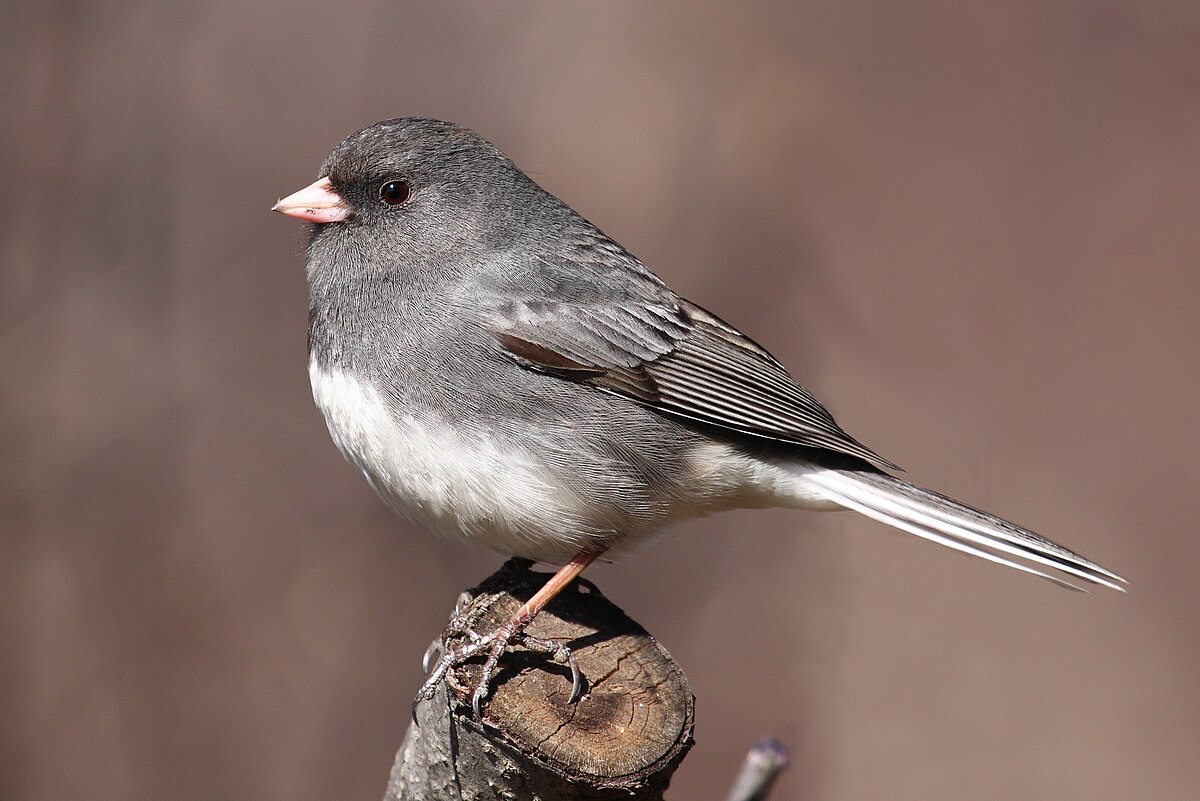
Dark-eyed Junco. Photo: Wikimedia Commons
The juncos have moved in. Dark-eyed Juncos were the most-reported sparrow in the state in October, with almost 5,000 reports, and they're sticking around into November. Here's a game for your next cup of coffee at the window: Colorado juncos come in several flavors, including Gray-headed, Oregon, Pink-sided and Slate-colored, and a single flock often mixes more than one. How many can you spot?
Rosy-finches are dropping in from the peaks. Gray-crowned Rosy-Finches went from a few October reports to dozens in early November, including a flock of about 150 at Rampart Reservoir on November 14, with Black Rosy-Finches mixed in. Colorado is one of the few places where all three rosy-finch species spend the winter, and the deeper the mountain snow gets, the lower they come.
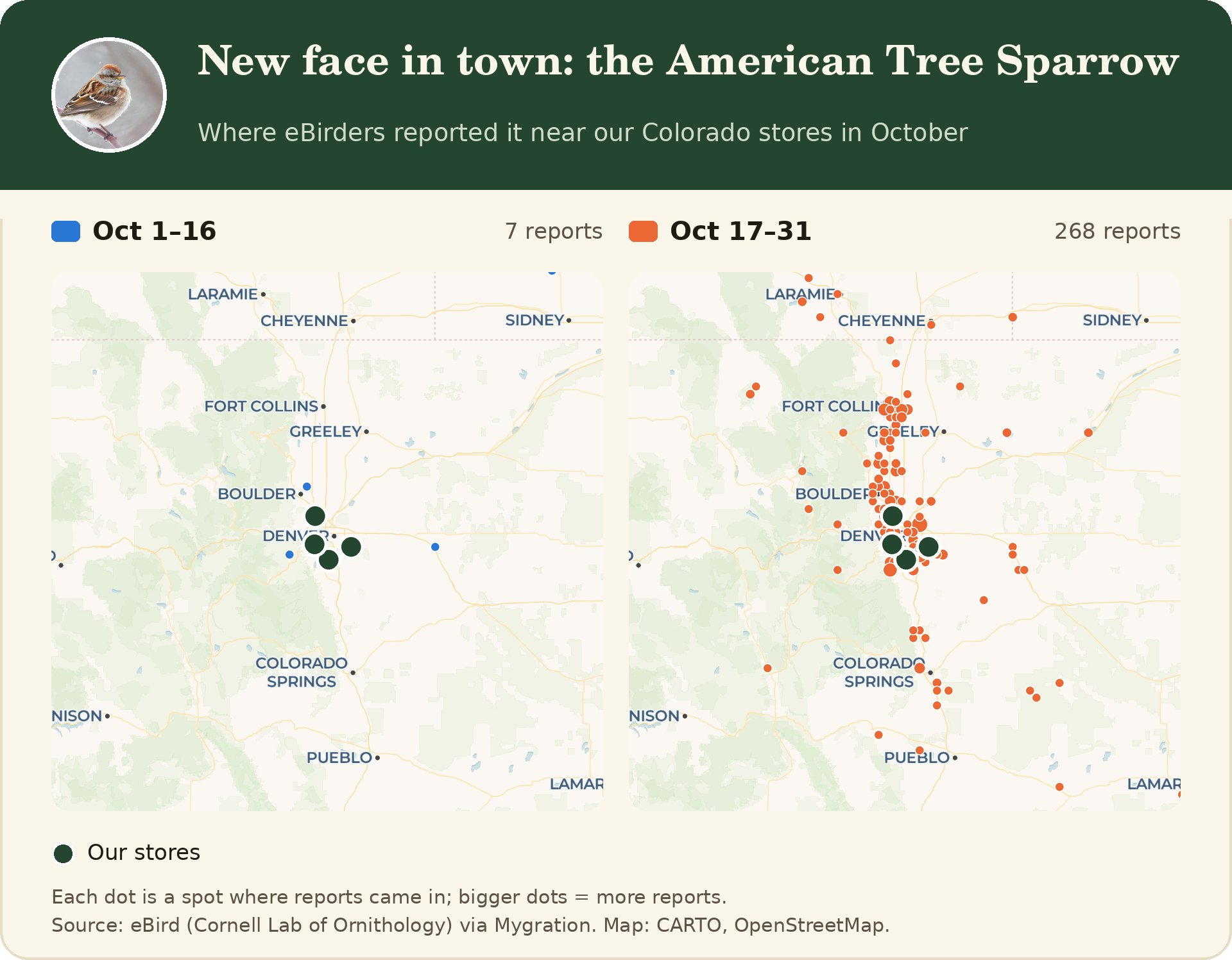
Where the American Tree Sparrow turned up near our stores. Blue: Oct 1–16. Orange: Oct 17–31.
The mountain finches came to town
The biggest surprise of the month? Mountain birds showing up where you'd never expect them. Evening Grosbeaks, chunky yellow-and-black finches with seed-crushing beaks, were reported more than 650 times in Colorado, including flocks of up to 20 at reservoirs and parks out on the plains. Cassin's Finches, Red Crossbills and Pine Siskins turned up at Denver-area parks and backyard feeders, not just in the foothills, and Cassin's Finches spent weeks working over backyard feeders in Aurora. When the cone and seed crops up high are poor, these birds come down looking for a meal. Black-oil sunflower and Nyjer are the welcome mat.
Rare birds of the month
Every month a few birds take a very wrong turn, and birders drop everything to go see them. eBird flags a sighting as "notable" when the species is unusual for that place and season. These are October's best, all confirmed by eBird's reviewers:
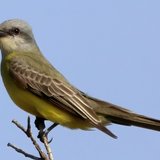 Couch's Kingbird at Marjorie Perry Nature Preserve in Greenwood Village. This flycatcher belongs in south Texas and Mexico, yet it showed up on October 3, stayed all month, and was still being reported in mid-November. With almost 100 confirmed reports, it was the state's most-watched rare bird.
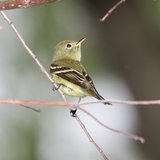 Yellow-bellied Flycatcher on the Vista Trail at Cherry Creek State Park, October 1–6. An eastern bird making a rare pit stop in Colorado.
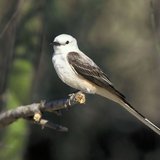 Scissor-tailed Flycatcher at Chatfield State Park on October 8. Picture a pale gray bird trailing a ridiculously long forked tail.
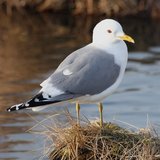 Short-billed Gull at Lake Loveland, October 17–18, and an Iceland Gull at Timnath Reservoir on October 11. Two gulls, both a long way from home.
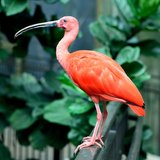 Scarlet Tanager at Rock Ledge Ranch in Colorado Springs on October 10, a flash of red from the eastern forests.
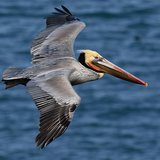 Brown Pelican on October 20, a long, long way from the coast.
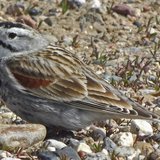 Thick-billed Longspurs at both Chatfield and Cherry Creek state parks in mid-October, plus a Chestnut-collared Longspur at Cherry Creek.
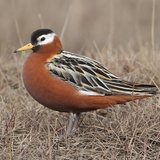 Red Phalarope and Black-bellied Plovers at Chatfield State Park in the last week of the month. Shorebirds on a road trip.
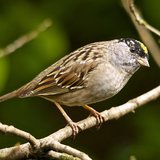 Golden-crowned Sparrows, a West Coast bird, in northern Colorado and at Chatfield late in the month.
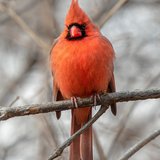 Northern Cardinal, Blue Jay and Eastern Phoebe sightings. Back east they're everyday backyard birds. Out here, they're a headline.
Bird photos: Wikimedia Commons and Pexels (Pixabay and others).
Raptor roundup
October is prime time for raptors in Colorado. Red-tailed Hawks and American Kestrels led the reports, and Ferruginous Hawks and Golden Eagles patrolled the eastern plains, with more than 200 reports each. Bald Eagles were reported more than 1,100 times and are claiming their winter spots at the reservoirs, so a lakeside walk this month is a good bet. Most Swainson's Hawks were gone by mid-October, Ospreys thinned out fast by the end of the month, and a few late birds were still hanging around Chatfield into November.
What to watch for in November
- Bohemian Waxwings rolled in early in November, with flocks reported in Fort Collins, the Denver suburbs and Summit County. They travel in gangs, so check any crabapple or juniper loaded with berries.
- Snow Buntings have been reported at Rocky Mountain Arsenal and Barr Lake. Watch for flashes of white over open ground.
- Loons and sea ducks are dropping onto the big reservoirs. Pacific and Red-throated Loons and Black Scoters were all reported in northern Colorado in early November.
- Northern Pygmy-Owls are being reported more often as they slip down into the foothills for the winter. Tiny, fierce, and often out in daylight.
Get your yard ready
Out with the summer menu, in with the winter one. Ground-feeding sparrows and juncos want millet and seed blends scattered low. Finches go for Nyjer and sunflower. Woodpeckers, nuthatches and chickadees will lean hard on suet as the temperature drops. And here's the secret weapon: once it's below freezing, open water is often harder for birds to find than food, so a heated bird bath can pull in birds that would never visit a feeder. Stop by the store and we'll help you set up for the crowd coming through your neighborhood.
About this report: the numbers come from sightings birders submitted to eBird, the Cornell Lab of Ornithology's citizen-science project, collected by our Mygration bird-migration map. Counts are numbers of reports, not bird populations, so treat them as a way to compare species and weeks rather than a census. "Notable" sightings are the ones eBird flags as unusual for the place and season. We've only listed sightings that eBird's reviewers confirmed and that were made at public locations.